


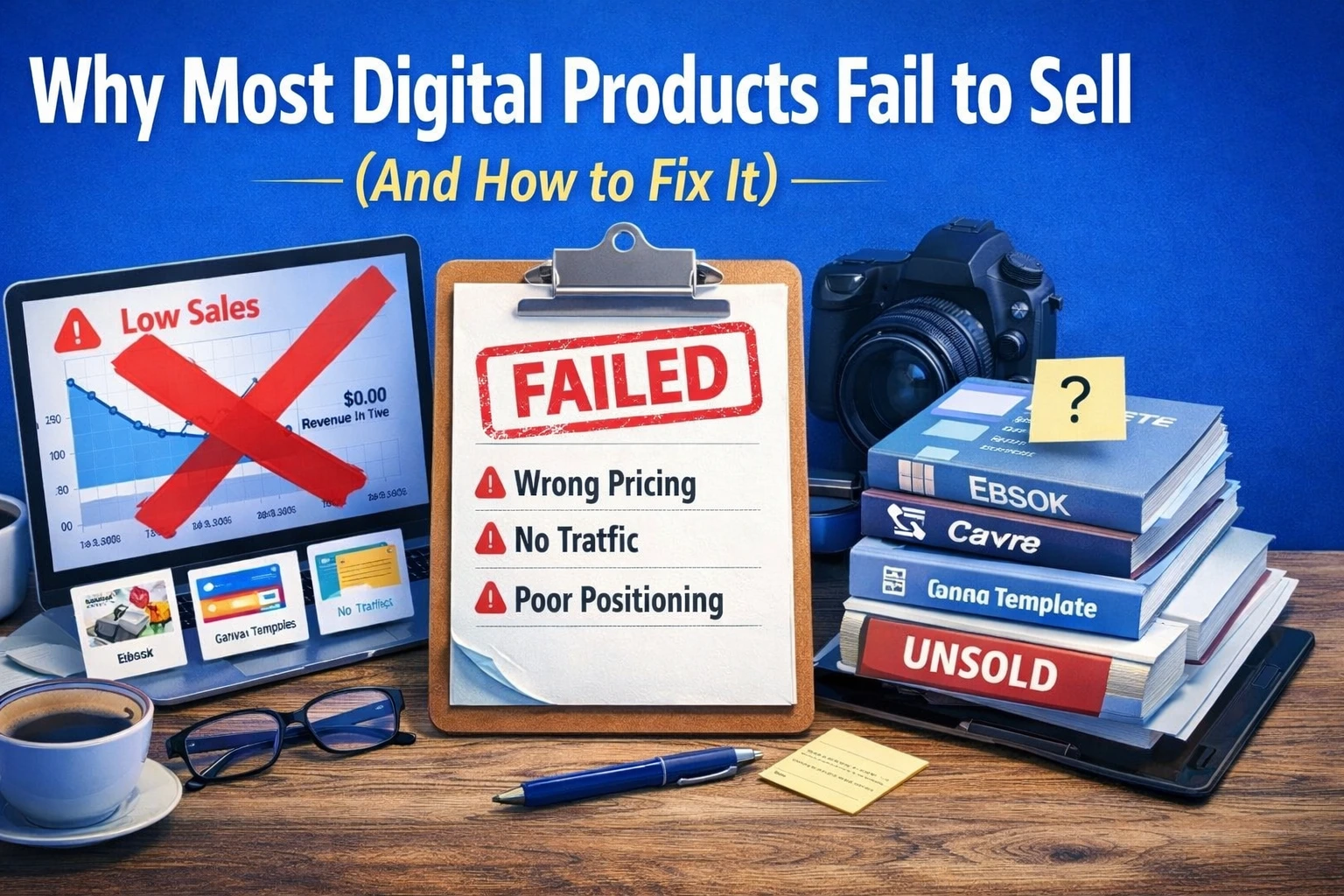
 Common reasons digital products fail to sell such as poor pricing, no traffic, and weak positioning.
Selling digital products looks easy from the outside.
You create a template, a bundle, or a course, upload it to a marketplace, and wait for sales.
But the reality is different.
Thousands of creators launch digital products every day, yet most of them struggle to make even a few sales. The problem usually isn’t the platform or the market. It’s the strategy behind the product.
If your digital products are not selling, it usually comes down to a few common mistakes. These mistakes are easy to overlook, especially for beginners.
In this guide, we’ll explore why most digital products fail to sell and how you can fix those issues step by step. You’ll also learn practical strategies used by successful creators to turn digital products into consistent income.
Table of Contents
- What Is a Digital Product Business
- Why Most Digital Products Fail to Sell
- Common Mistakes Creators Make
- When Digital Products Work Best
- When Digital Products Struggle to Sell
- How to Fix Digital Product Sales Problems
- Comparison: Good Digital Products vs Failing Ones
- Benefits of Solving These Problems
- Trust Signals and Best Practices
- Frequently Asked Questions
- Conclusion
What Is a Digital Product Business?
A digital product business is a business model where creators sell downloadable or online assets instead of physical goods.
These products can include:
- Canva templates
- AI prompts
- ebooks
- courses
- planners
- design assets
- presets
- digital bundles
Because digital products do not require inventory or shipping, they are often seen as one of the easiest online businesses to start.
Platforms like Etsy, Gumroad, and Shopify allow creators to sell downloadable files directly to customers. Shopify even provides guides on how to start selling digital products through online stores.
However, starting is easy. Selling consistently is the real challenge.
Why Most Digital Products Fail to Sell
Many creators assume that simply uploading a product online will automatically generate sales.
Unfortunately, that rarely happens.
Here are the most common reasons digital products fail.
1. No Real Problem Being Solved
The biggest reason digital products fail is simple.
They don’t solve a clear problem.
People search online because they want solutions. If your product doesn’t solve a specific issue, it will struggle to sell.
For example:
❌ Generic product
“Instagram template pack”
✅ Problem-solving product
“30 Instagram post templates for small business marketing”
The second one clearly solves a problem.
2. Poor Product Positioning
Sometimes the product itself is good.
But the way it is presented is weak.
Positioning matters.
A digital product should clearly communicate:
- who it is for
- what problem it solves
- what result users can expect
Without clear positioning, visitors quickly lose interest.
3. No Traffic
Another common issue is lack of traffic.
Even the best digital product cannot sell if no one sees it.
Creators often upload products to marketplaces and expect organic sales. But most successful creators combine marketplaces with:
- SEO blog content
- social media traffic
- email lists
- content marketing
This is why many creators use blog content to attract organic traffic before linking to their products.
4. Weak Product Design
Digital products must look professional.
Poor design immediately lowers perceived value.
For example:
- cluttered templates
- outdated fonts
- inconsistent layouts
Good design increases trust.
Platforms like Canva make it easy to create professional designs even without advanced design skills.
5. Bad Pricing Strategy
Pricing mistakes are extremely common.
Some creators price too low.
Others price too high.
Pricing should reflect:
- product value
- bundle size
- niche demand
- competition level
Testing different pricing strategies often helps improve conversions.
Common Mistakes Creators Make
Understanding mistakes can help you avoid them early.
Here are a few patterns seen across failing digital products.
Selling Without Market Research
Creators sometimes build products before checking demand.
Simple keyword research can reveal what people are already searching for.
Copying Competitors
Many beginners copy trending products without adding unique value.
This leads to saturated markets.
Ignoring Product Bundles
Bundles often perform better than single products.
For example:
- Canva templates bundle
- social media content bundle
- AI prompts bundle
Bundles provide more value and attract more buyers.
When Digital Products Work Best
Digital products tend to perform well when they meet certain conditions.
Clear Problem-Solution Fit
Example:
“How to create 30 days of social media content quickly”
Templates that solve this problem often sell well.
Time Saving Tools
Creators value tools that save time.
Examples include:
- content templates
- workflow systems
- design assets
Ready-to-Use Resources
Products that are easy to implement tend to convert better.
Examples:
- done-for-you templates
- editable planners
- content frameworks
These products require minimal effort from the buyer.
When Digital Products Struggle to Sell
There are also situations where digital products perform poorly.
Oversaturated Niches
If hundreds of identical products exist, differentiation becomes difficult.
Lack of SEO
Many creators ignore search traffic.
Without search visibility, long-term growth becomes difficult.
Weak Product Pages
Product pages should explain:
- what the product includes
- how it helps users
- who should use it
Without this clarity, buyers hesitate.
How to Fix Digital Product Sales Problems
Fixing these issues usually requires a few strategic changes.
Step 1: Focus on Problem-Solving Products
Instead of creating random digital products, start with a specific problem.
For example:
“How to plan 30 days of Instagram content”
A content calendar template becomes a solution.
Step 2: Improve Product Positioning
Your product title and description should explain:
- the benefit
- the target audience
- the main outcome
Clarity improves conversion rates.
Step 3: Create Product Bundles
Bundles increase perceived value.
Examples:
-
Canva social media template bundle
-
AI prompts bundle for content creators
-
Instagram reels content bundle
Bundles also increase average order value.
Step 4: Build Traffic Through Content
Content marketing is one of the most reliable traffic strategies.
Creators often write helpful guides like:
- how to create social media content faster
- how to start a digital product business
- how to sell digital downloads online
These articles attract search traffic and naturally link to digital products.
Step 5: Improve Visual Presentation
Better design leads to higher conversions.
This includes:
- clear product previews
- simple layouts
- readable fonts
- consistent branding
Even small improvements can make a big difference.
Comparison: Successful vs Failing Digital Products
| Factor | Successful Products | Failing Products |
|---|---|---|
| Problem Solving | Clear problem addressed | Generic products |
| Traffic | SEO + content marketing | No traffic strategy |
| Design | Professional visuals | Poor presentation |
| Positioning | Clear value | Confusing description |
| Bundles | Higher perceived value | Single low-value product |
Benefits of Solving These Problems
Once these issues are fixed, digital products can become much more profitable.
Benefits include:
- higher conversion rates
- stronger brand credibility
- better organic traffic
- scalable online income
Many successful creators build entire businesses around digital products by continuously improving their product positioning and marketing strategy.
Trust Signals and Best Practices
When selling digital products, trust matters.
Here are some best practices:
- clearly explain product contents
- show product previews
- include user instructions
- provide customer support
Marketplaces like Etsy also recommend detailed product descriptions and clear visuals to improve buyer confidence.
These simple practices increase trust and improve conversions.
Frequently Asked Questions
Why do most digital products fail?
Most fail because they do not solve a specific problem or attract enough traffic.
Do digital products still sell in 2026?
Yes. The creator economy and digital downloads market continue to grow rapidly.
How do I know if a digital product idea is good?
Check search demand, competitor products, and user needs before creating the product.
Should beginners start with bundles or single products?
Bundles often perform better because they provide more perceived value.
How important is SEO for digital products?
SEO is extremely important for long-term traffic and organic sales.
Can digital products generate passive income?
Yes, but they usually require initial setup, marketing, and optimization.
What platforms are best for selling digital downloads?
Popular platforms include Etsy, Gumroad, Shopify, and personal websites.
Do I need design skills to create digital products?
Not necessarily. Tools like Canva make it easier to design templates and digital assets.
Why do some digital products sell immediately?
Usually because they solve a very clear problem and target the right audience.
Conclusion
Digital products can be a powerful business model. They require no inventory, minimal overhead, and can scale globally.
But success doesn’t come from simply uploading files online.
Most digital products fail because they lack clear problem solving, traffic strategy, or strong positioning.
Once those issues are fixed, digital products become far more effective.
Focus on solving real problems, creating useful bundles, improving product presentation, and building traffic through helpful content.
Over time, these small improvements can turn a struggling digital product into a successful online asset.
Read more: How to Find Digital Products You Can Resell Online (Beginner Guide)
Leave a Reply