


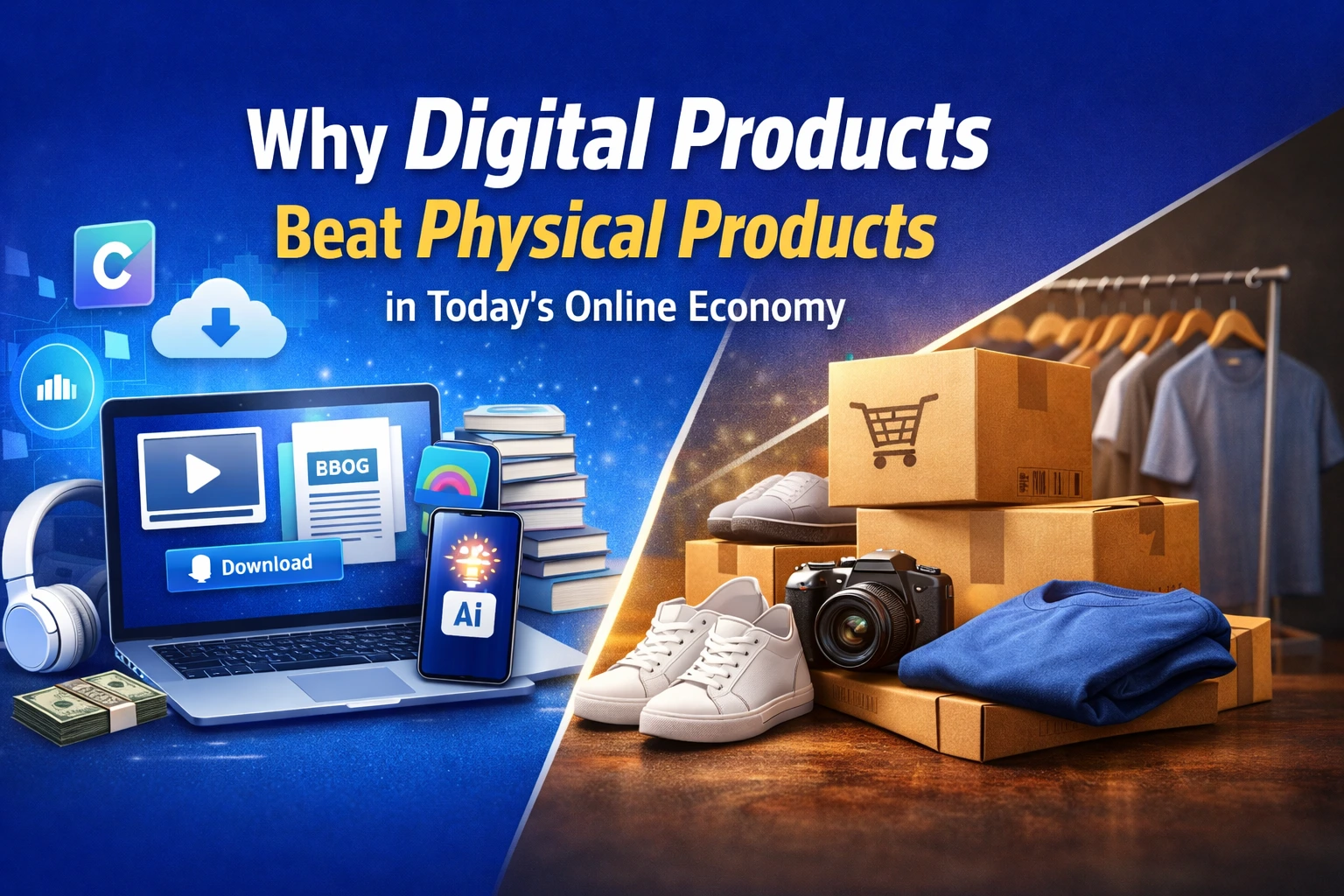
Starting an online business used to mean dealing with physical products. You had to manage inventory, shipping, packaging, and returns. While that model still works for many companies, the rise of digital products has completely changed how people build online income streams.
Today, many creators, freelancers, and entrepreneurs prefer selling digital products because they are easier to launch and much easier to scale.
In this article, we’ll explore why digital products are often a better option than physical products for modern online businesses.
What Are Digital Products?
Digital products are downloadable assets that customers can access instantly after purchase.
Common examples include:
- AI prompt bundles
- Canva templates
- Ebooks
- Online courses
- Digital planners
- Lightroom presets
- Graphic design bundles
Unlike physical goods, digital products don’t require storage or shipping.
Once created, they can be sold repeatedly without additional production costs.
Physical Products: The Traditional Business Model
Physical products are tangible items that must be manufactured, stored, and shipped.
Examples include:
- Clothing
- Electronics
- Home decor
- Printed books
- Handmade products
While physical products can be profitable, they involve several operational challenges.
Let’s look at the major differences.
1. No Inventory Needed
With physical products, you need inventory.
This means:
- manufacturing costs
- storage space
- inventory management
If a product doesn’t sell, you’re left with unsold stock.
Digital products eliminate this problem.
Once a digital product is created, it can be sold unlimited times without additional inventory.
2. No Shipping or Logistics
Shipping is one of the most complicated parts of running a physical product business.
You must manage:
- packaging
- delivery times
- shipping fees
- damaged items
- international logistics
Digital products are delivered instantly through downloads.
There are no warehouses or shipping delays.
Customers receive the product immediately after purchase.
3. Higher Profit Margins
Physical products include many hidden costs:
- manufacturing
- packaging
- shipping
- storage
- returns
These costs reduce profit margins.
Digital products have almost zero production cost after creation.
This allows creators to keep a larger portion of the revenue.
4. Easy to Scale
Scaling a physical product business often requires:
- more inventory
- larger warehouses
- logistics teams
Digital products scale automatically.
Whether you sell 10 copies or 10,000 copies, the process is the same.
This scalability makes digital products attractive for entrepreneurs who want to grow online businesses without large operational overhead.
5. Faster Product Creation
Creating physical products can take months.
You must go through:
- design
- manufacturing
- testing
- production
Digital products can be created much faster.
In many cases, creators start with ready-made digital assets and customize them for their brand.
For example, platforms like Pixbundle offer resell-ready digital bundles that include assets such as Canva templates, ebooks, graphic packs, and AI prompts. These bundles help creators launch digital products quickly without starting from scratch.
You can explore examples here: https://pixbundle.com
6. Perfect for the Creator Economy
The creator economy has grown rapidly in recent years.
Many creators now build businesses around digital products such as:
- online courses
- design templates
- content packs
- digital downloads
Digital products fit perfectly into this ecosystem because they allow creators to monetize knowledge, skills, and creativity.
According to Shopify’s digital product guide, downloadable products have become one of the most popular online business models because of their flexibility and scalability.
https://www.shopify.com/blog/digital-products
7. Global Reach Without Extra Cost
Selling physical products internationally can be complicated.
You must handle:
- customs fees
- shipping costs
- delivery delays
Digital products can be sold globally with no additional effort.
A customer in another country can download the product instantly.
This allows creators to reach a worldwide audience.
8. Easier Business Automation
Digital businesses are easier to automate.
With the right tools, you can automate:
- product delivery
- payment processing
- email marketing
- customer onboarding
This means you can build systems that generate revenue even while you sleep.
Physical product businesses require constant operational involvement.
When Physical Products Still Make Sense
While digital products have many advantages, physical products are still valuable in certain industries.
For example:
- handmade crafts
- fashion brands
- hardware products
- luxury goods
These products rely on physical experiences that cannot be replaced digitally.
However, many businesses now combine both models.
For example, a brand might sell physical items alongside digital resources or guides.
A Growing Opportunity for Digital Entrepreneurs
The digital product industry continues to grow.
Many entrepreneurs are building businesses around:
- template marketplaces
- online courses
- digital downloads
- design bundles
Starting a digital product business no longer requires advanced technical skills.
Many creators begin with editable resources and customize them for their audience.
Platforms such as Pixbundle provide collections of ready-to-use digital assets that can be used to build digital products or online stores more quickly.
You can see the types of digital assets available here:
https://pixbundle.com
Final Thoughts
Both digital and physical products have their place in online commerce.
However, for many creators and entrepreneurs, digital products offer several advantages:
- no inventory
- no shipping
- higher profit margins
- easier scalability
- faster product creation
Because of these benefits, digital products have become one of the most attractive ways to start an online business today.
Whether you create products from scratch or customize existing assets, the digital product economy offers countless opportunities for creators who want to build flexible and scalable businesses online.
If you’re exploring digital entrepreneurship, learning how digital products work is a great first step toward building a sustainable online income stream.
Leave a Reply